
The short answer
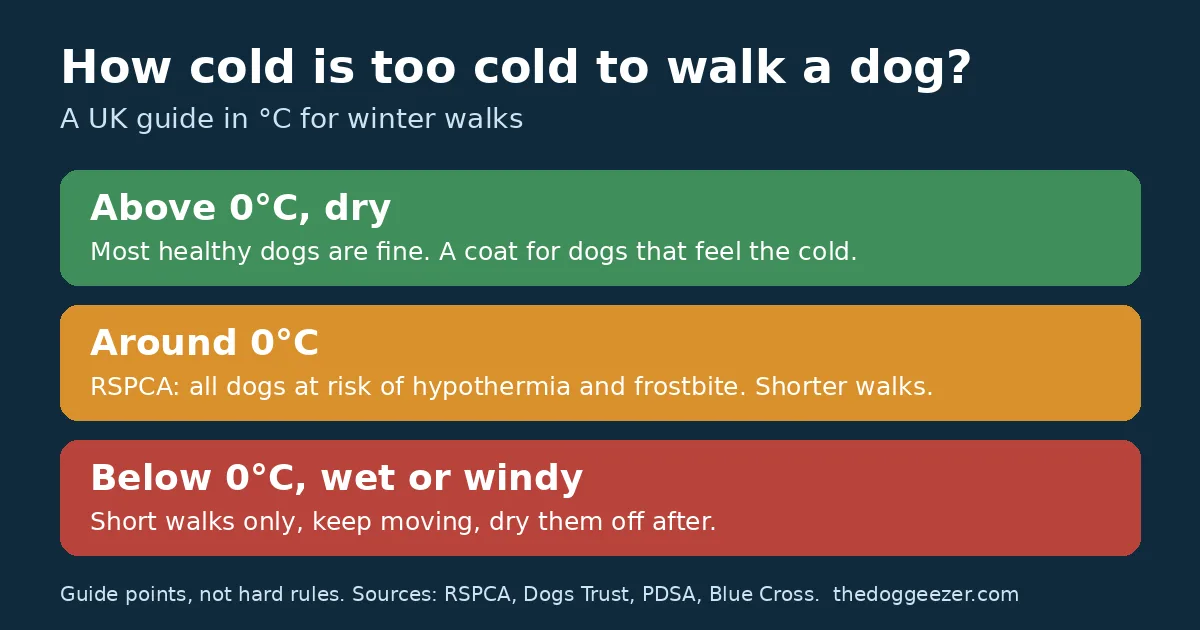
There's no single temperature where every dog should stay in. The RSPCA says that when the temperature reaches freezing (0°C), all dogs are at risk of hypothermia and frostbite, especially small, slim, young and old dogs. So around 0°C is how cold is too cold to walk a dog without extra care: shorter walks, a coat and close watching.
UK animal charities don't give one cut-off figure, and the RSPCA adds that dogs with little or no fur are at extra risk. Most healthy dogs still need and enjoy a winter walk, and walking a dog in cold weather is fine with a few changes. Here's how to judge it for your dog.
This isn't vet advice. If your dog has a health condition, or you're worried about them in the cold, check with your vet.
The short answer: a UK guide in °C
These are guide points, not hard rules, based on what the RSPCA, Blue Cross, Dogs Trust and PDSA say.
| Temperature | What it means for a walk |
|---|---|
| Above 0°C, dry | Most healthy dogs are fine. Blue Cross says that as long as your dog is healthy and able, try to walk them in all weather if possible. Dogs that feel the cold may want a coat. |
| Around 0°C (freezing) | The RSPCA says all dogs are at risk of hypothermia and frostbite at freezing. Keep walks shorter, use a coat for dogs that feel the cold, and watch for signs they're too cold. |
| Below 0°C, or freezing with wind, rain or snow | Short walks only, and keep them moving. Wet fur is a risk: the RSPCA says hypothermia usually comes after exposure to freezing temperatures or having wet fur. |
Wind and wet make it colder than the number on the forecast. A dry, still 2°C morning is a very different walk to a wet, windy one, so how cold is too cold to walk a dog depends on the weather as well as the thermometer.
Which dogs feel the cold most
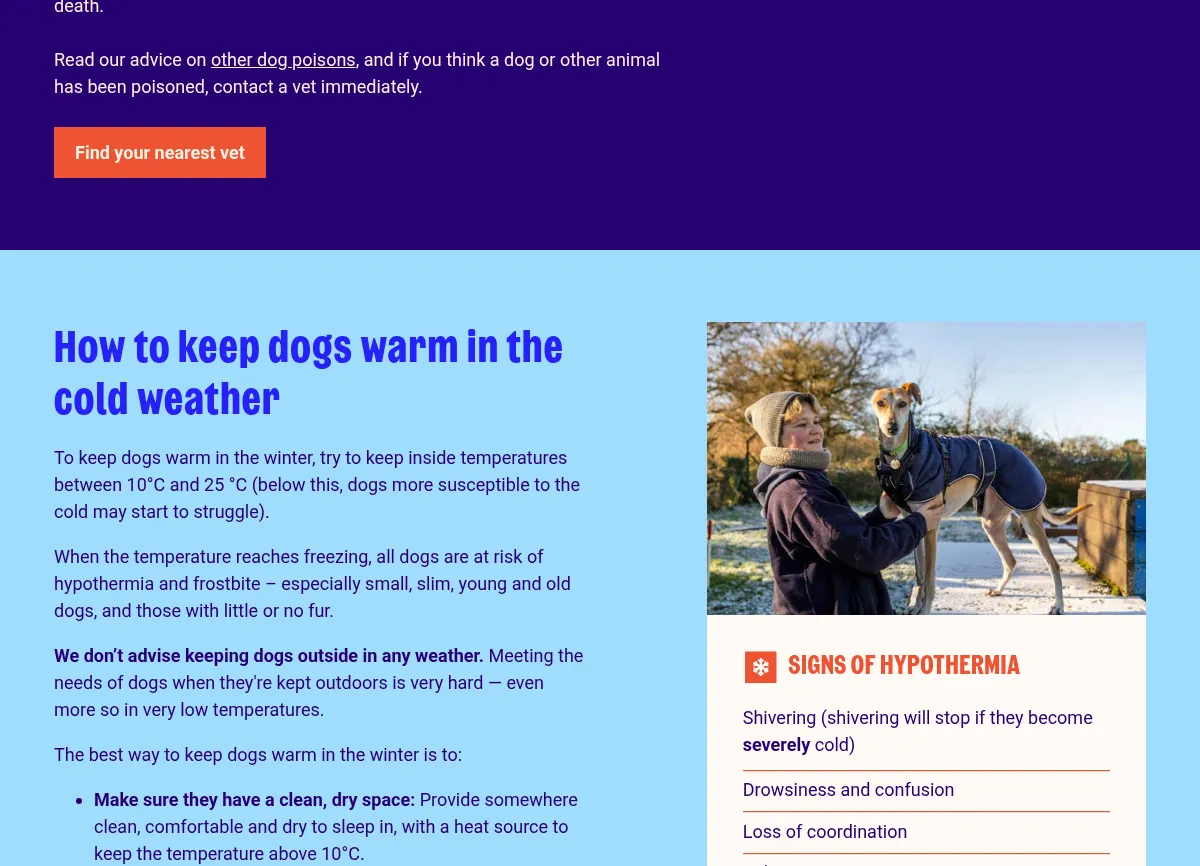
The RSPCA says different dogs are comfortable at different temperatures, and these dogs feel the cold more:
- Small dogs. They lose body heat faster, and they're closer to the ground.
- Dogs with thin, short or no fur.
- Puppies, because their ability to regulate their temperature hasn't fully developed.
- Older dogs, sick dogs, and dogs who aren't used to the cold.
Blue Cross says breeds such as Labradors, huskies and German shepherds are less bothered by the cold because of their thick coats, but that all dogs are individuals, and some feel the cold more, particularly as they get older.
PDSA says colder weather can sometimes make stiff joints and arthritis a lot worse in older pets.
Signs your dog is too cold on a walk
Blue Cross says that if your dog starts lifting their paws, whining or stopping on a walk, their feet could be too cold. Shivering is another sign, and the RSPCA lists it first among the signs of hypothermia. In my opinion, if your dog slows right down or keeps turning for home, listen to them.
The RSPCA lists these signs of hypothermia:
- shivering (which stops if they become severely cold)
- drowsiness and confusion
- loss of coordination
- pale gums
- loss of consciousness or collapse
If you see these, the RSPCA says to warm your dog up slowly, never placing anything hot directly on their skin, and to contact your vet immediately. Hypothermia can be fatal if not treated quickly.
Frostbite
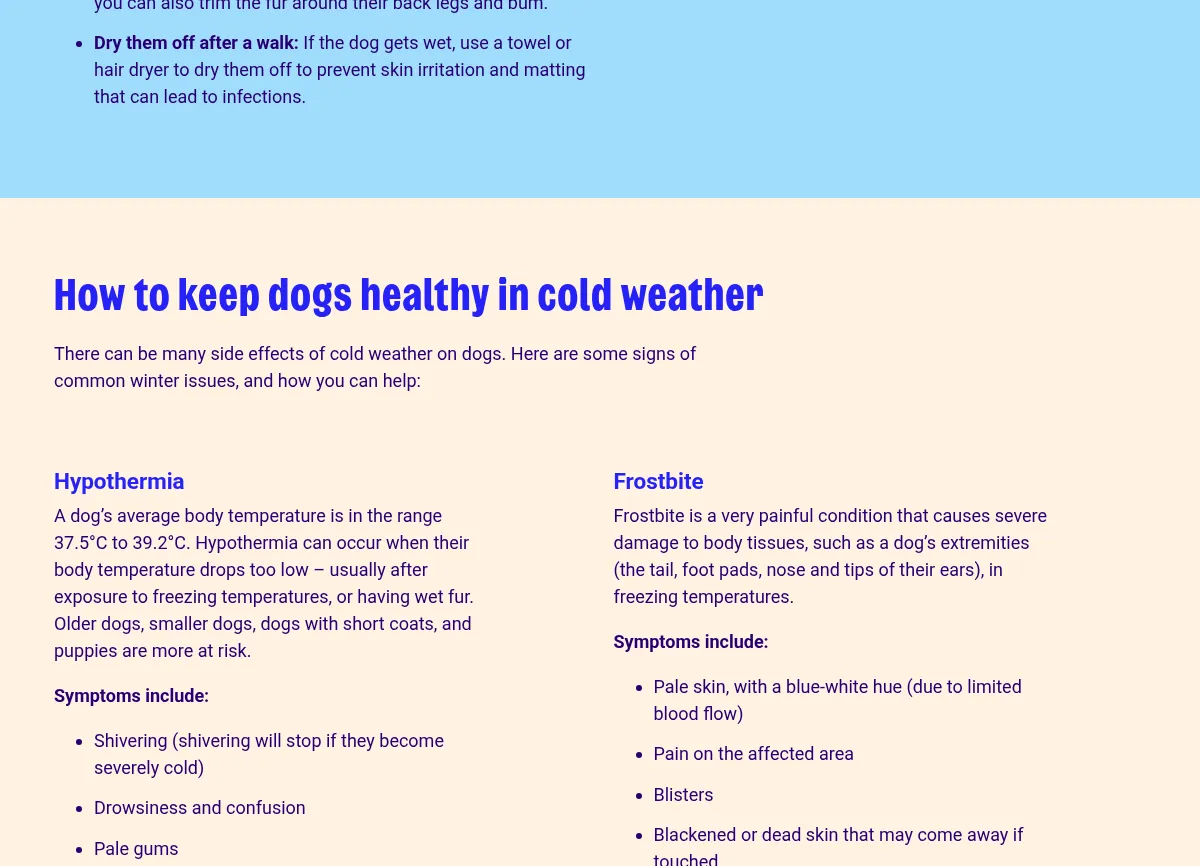
The RSPCA says frostbite damages the extremities, such as the tail, foot pads, nose and tips of the ears, in freezing temperatures. It lists these signs:
- pale skin with a blue-white hue
- pain in the affected area
- blisters
- blackened or dead skin that may come away if touched
If you spot any of these after a cold walk, ring your vet.
Walking your dog in cold weather: how to change walks
- Shorter, more often. PDSA says walks might be shorter than normal in winter, so add some play sessions indoors. In my opinion, two short walks can be better than one long one.
- Go in daylight. PDSA says that where you can, walk your dog during daylight hours.
- Keep them moving. My advice is to keep the walk going rather than standing about in the cold.
- On the lead in snow. Dogs Trust says snow can cover unsafe areas, deep patches or holes, so keep your dog on a lead.
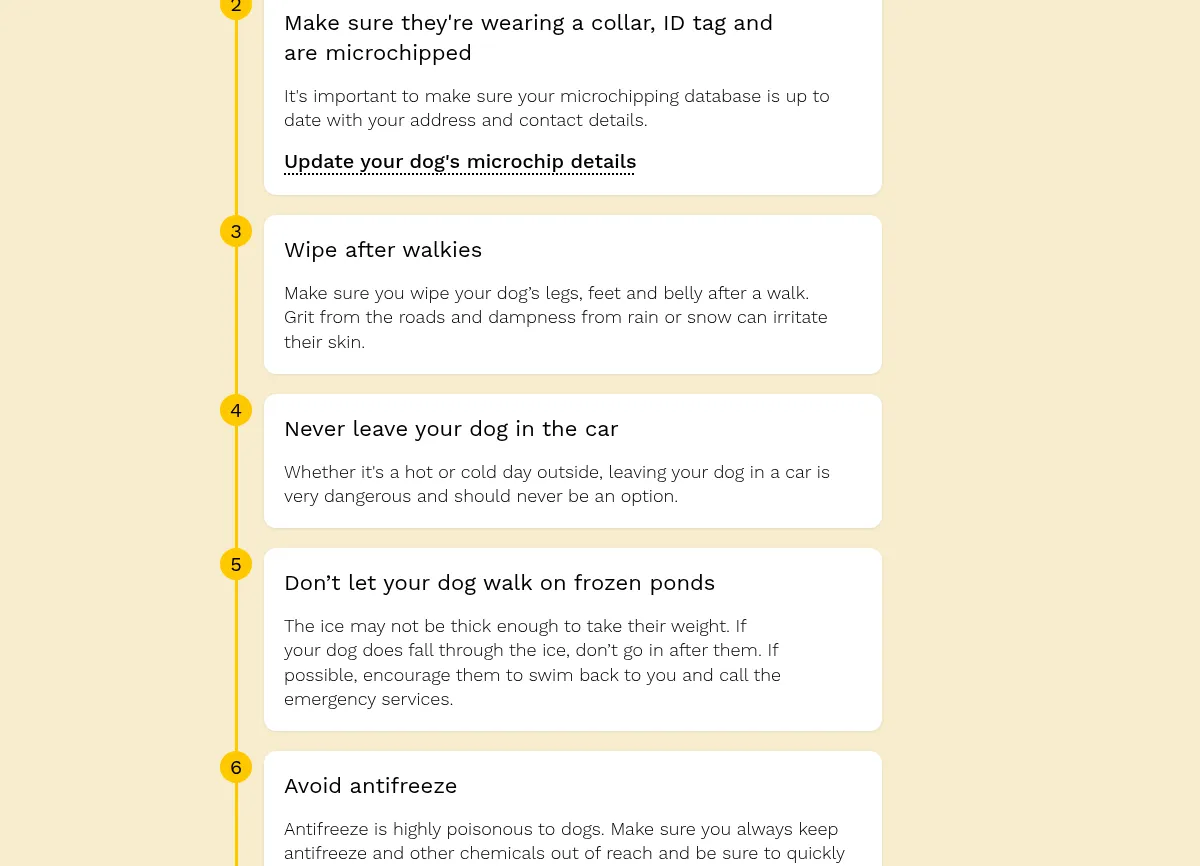
- ID tag and chip. Dogs Trust says make sure your dog wears a collar and ID tag, and that their microchip details are up to date.
- Feed to match. PDSA says that if your dog's exercise drops in winter, so should how much you feed.
- Check the lead and clips. Dogs Trust says wet weather can rust metal clips, so check the lead, collar and harness are working safely before you head out.
On milder days your dog will need their usual exercise again, and my guide to how long a dog walk should be covers how much by size, breed and age.
Paws, grit, salt, ice and frozen water
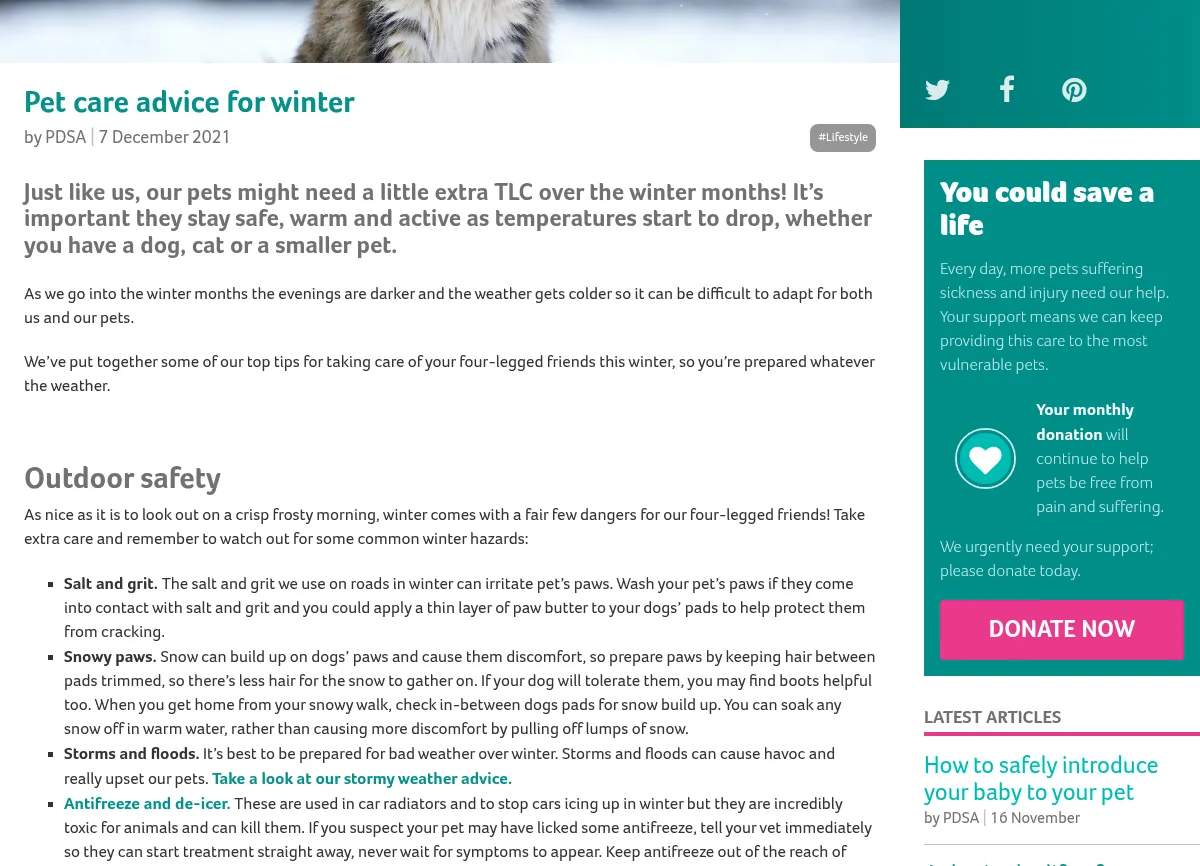
- Wipe after every walk. Dogs Trust says to wipe your dog's legs, feet and belly, because grit from the roads and dampness from rain or snow can irritate their skin. The RSPCA says antifreeze and rock salt are poisonous to dogs, so wipe their paws and tummy thoroughly.
- Avoid gritted areas where you can. PDSA says to take extra care to avoid areas with grit, and to check paws for sores, cuts and irritation when you get home.
- Snowballs between the toes. PDSA and Blue Cross both suggest keeping the fur between the pads trimmed so snow and ice don't build up.
- Paw balm or boots. PDSA suggests a thin layer of paw butter to help protect pads from cracking. Blue Cross says boots can help, introduced slowly, and never forced.
- Frozen ponds. Dogs Trust says don't let your dog walk on frozen ponds, as the ice may not take their weight. If your dog falls through, don't go in after them. Encourage them to swim back to you and call the emergency services.
- Antifreeze. Dogs Trust says antifreeze is highly poisonous to dogs. PDSA says to tell your vet immediately if you think your dog has licked any, rather than waiting for symptoms.
Do dogs need coats in winter?
Some do. Dogs Trust says some shorter-haired breeds and puppies need a coat when it gets chilly. The RSPCA says the dogs that need winter coats are elderly dogs, young dogs, dogs with thin or short fur and dogs with medical conditions, and that a coat should be snug without restricting movement.
Dogs Trust also says a coat is a new experience for some dogs, so introduce it gradually and positively. Blue Cross says thick-coated breeds such as Labradors, huskies and German shepherds are less bothered by the cold.
Walking in the dark on winter evenings
Dogs Trust says to make sure your dog is visible to people in cars, with a high-visibility coat, a flashing collar or a light attachment. PDSA says a good torch is a must, and not to let your dog off the lead after dark, as there could be hidden hazards. Make yourself visible too. If you're deciding what to clip a light or ID tag to, my guide to harness or collar for walking covers the pros and cons.
Darker evenings can come with fireworks as well. If your dog struggles with them, see my guide to dog fireworks anxiety.
Days that are too cold to walk
Walking a dog in cold weather isn't always the right call. Blue Cross says not to go out if it puts you at risk, for example on slippery paths. PDSA suggests waiting for a break in the weather if your dog is reluctant to go out.
Indoors, the RSPCA suggests keeping temperatures between 10°C and 25°C, as dogs that feel the cold may start to struggle below that.
On days when it really is too cold to walk a dog for long, Dogs Trust suggests indoor games like hide and seek or "find it", long-lasting chews, food-releasing toys and enrichment games. Dogs Trust also suggests working short training sessions and treat trails into shorter walks.
Sources I used
- RSPCA: How to help dogs in cold weather
- Dogs Trust: How to keep your dog safe and warm in cold weather
- PDSA: Pet care advice for winter
- Blue Cross: Dogs in winter
Checked 19 November 2026.
FAQs
Is it too cold to walk my dog at 0°C?
Not usually for a healthy adult dog, but take care. The RSPCA says all dogs are at risk of hypothermia and frostbite at freezing, so keep walks shorter, use a coat for dogs that feel the cold, and watch for signs they're too cold.
Do dogs need a coat in winter?
Some do. The RSPCA says elderly dogs, young dogs, dogs with thin or short fur and dogs with medical conditions need winter coats. Blue Cross says thick-coated breeds are less bothered by the cold.
Is grit or road salt bad for dogs' paws?
Yes. PDSA says salt and grit can irritate paws, and the RSPCA says rock salt and antifreeze are poisonous to dogs. Wipe their paws, legs and tummy after every winter walk.
Can I walk my dog in snow?
Yes, if they're healthy and you can walk safely. Dogs Trust says keep your dog on a lead in snow, because it can hide holes and unsafe areas.
How long should a winter walk be?
Shorter than usual in very cold weather. PDSA says winter walks might be shorter, so add play indoors. Small, young, old and thin-coated dogs need the shortest walks.
What are the signs of hypothermia in a dog?
The RSPCA lists shivering (which stops if they become severely cold), drowsiness and confusion, loss of coordination, pale gums, and collapse. Warm them slowly and contact your vet immediately.
The Dog Geezer
Need a hand in Heywood, Rochdale, Middleton or Bury?
If you'd like someone to walk your dog through the winter, have a look at dog walking in Heywood, Rochdale, Middleton and Bury, and join the waiting list. Fully insured and DBS-checked.
Cheers, James