
The short answer
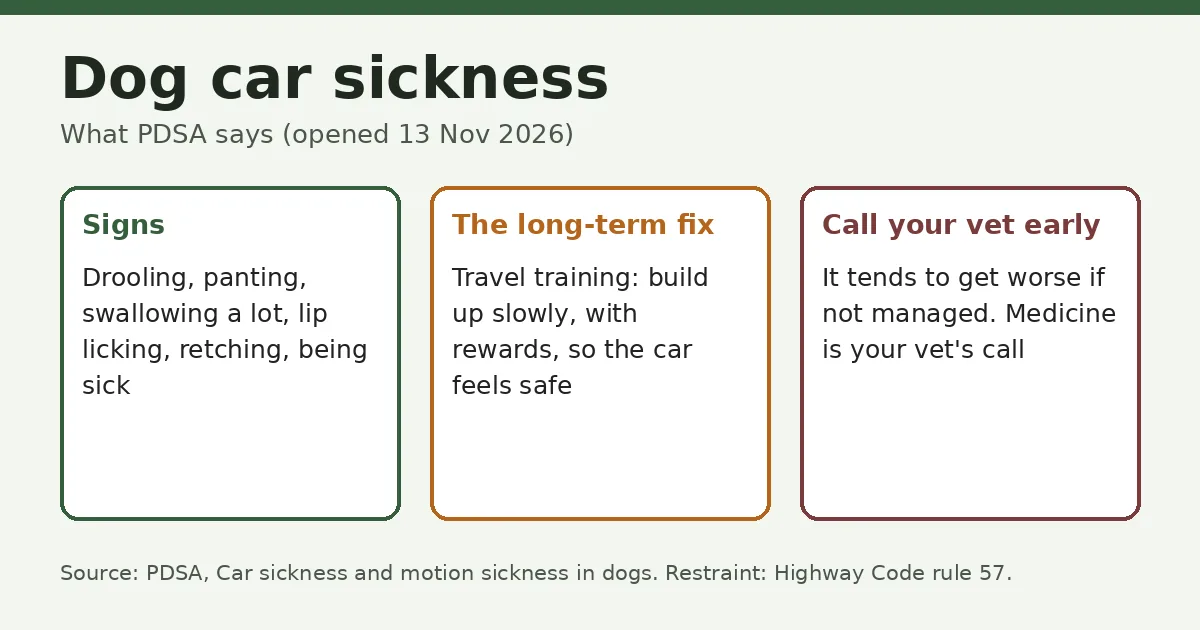
If your dog drools, pants or is sick in the car, you're not alone. PDSA says car sickness is a common problem for puppies and dogs, that it's likely to get worse over time if it isn't managed, and that the best long-term fix is travel training: helping your dog relearn that the car is a good place to be. Your vet can help too, including with medicine if it's needed.
I'm James, The Dog Geezer, a dog walker and trainer in Heywood. Below I've set out the signs of dog car sickness, why it happens, a step by step car training plan based on PDSA's method, how to set up the car safely, and when to call your vet. Every health and safety point comes from PDSA or GOV.UK, checked on 13 November 2026. I'm a trainer, not a vet, so anything about medicine is a conversation for your vet.
The short answer
- Speak to your vet early. PDSA says it's best to step in as soon as you notice a problem, because if it isn't managed it's likely to get worse.
- Travel training is the long-term fix. Take it back to basics and build up slowly with rewards, so your dog stops being afraid and feeling sick.
- Medicine is a vet's decision. PDSA says there are licensed anti-sickness medicines your vet can prescribe for severe car sickness, often used short term while you do the training. Non-prescription and human medicines are often not effective and can have side effects.
- Set the car up well. Restrain your dog properly, keep them cool, give them a non-slip spot and take breaks.
What causes car sickness?
PDSA explains that car sickness, or motion sickness, is thought to be caused when certain types of movement affect the balance centre in the brain, combined with anxiety or stress when travelling.
So there are usually two things going on at once:
- The movement itself. Some dogs simply feel queasy in a moving car.
- Worry. A dog who has felt sick before, or who isn't used to the car, can start to dread it. PDSA says some dogs with car sickness become afraid of travelling, which often makes their symptoms worse and leads to problems even on short journeys.
PDSA also says car sickness is common in puppies but can affect older dogs too, and that a dog is more likely to develop it if they aren't used to travelling or weren't slowly introduced to it as a puppy. So if you've got a new puppy, make the first car trips short and happy. My new puppy checklist covers the other things to sort in the first few weeks.
Symptoms of travel sickness in dogs
Being sick is the obvious one, but PDSA lists other signs that your dog is feeling nauseous:
- drooling
- panting
- swallowing a lot
- lip licking
- retching
Then there are signs your dog might be afraid of travelling. PDSA lists:
- barking or whimpering
- shaking before or during travel
- peeing or pooing in the car
- pulling away from the car or refusing to get in
Some dogs show a bit of both. You might see a dog who pulls back at the car door, then pants and drools ten minutes into the drive. That's the fear and the sickness feeding each other, which is exactly why PDSA says to deal with it early.
When to contact your vet
Dog car sickness is one of those problems where getting your vet involved early pays off.
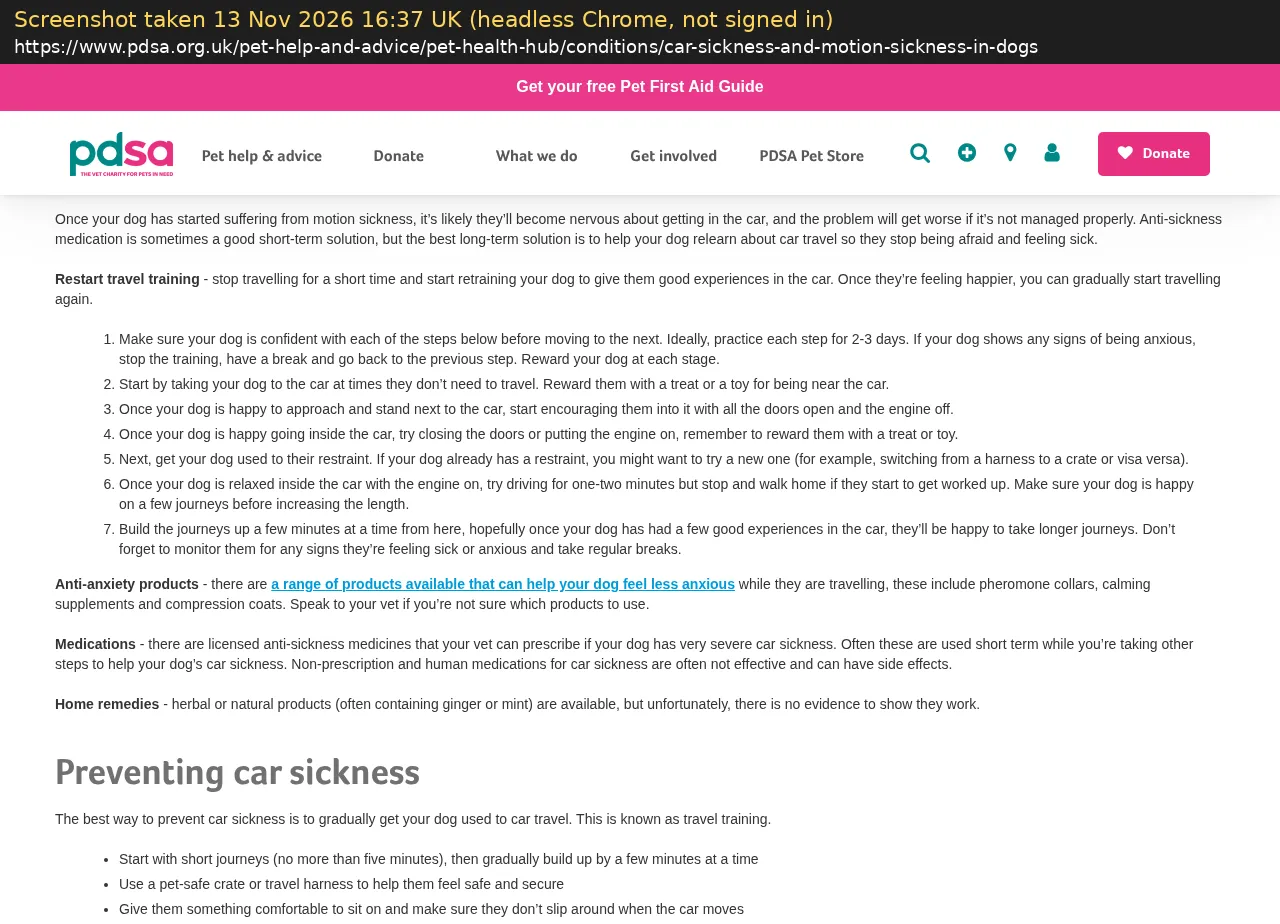
PDSA's advice is clear: if your dog is showing signs of a problem, speak to your vet before things get worse, because motion sickness tends to get worse over time if it isn't managed properly.
I'd also call your vet if:
- your dog is sick even on short journeys or on an empty stomach (PDSA's safe car travel page says to talk to your vet about medication if this happens)
- your dog seems unwell outside the car as well
- you've got a long journey coming up and you're worried
Your vet can check there's nothing else going on and talk you through options for your dog.
Treating travel sickness
PDSA sets out four routes. Here they are in plain terms:
- Restart travel training. Stop travelling for a short time and retrain your dog with good experiences in the car, then build up again gradually. This is PDSA's long-term fix, and my step by step version is below.
- Anti-anxiety products. PDSA says there's a range of products that may help a dog feel less anxious when travelling, such as pheromone collars, calming supplements and compression coats, and to speak to your vet if you're not sure which to use. I'm not going to recommend a brand.
- Medicine from your vet. PDSA says there are licensed anti-sickness medicines your vet can prescribe if your dog has very severe car sickness, often used short term alongside other steps. I won't name any medicines or doses here. That's your vet's job.
- Not home remedies. PDSA says herbal or natural products, often containing ginger or mint, are available but there's no evidence to show they work.
And please don't reach for your own travel sickness tablets. PDSA says non-prescription and human medications for car sickness are often not effective and can have side effects.
A step by step car training plan
This is PDSA's travel training method, in my own words, with the way I'd run it. PDSA says to make sure your dog is confident at each step before moving on, ideally practising each step for 2 to 3 days. If your dog shows any sign of being anxious, stop, have a break, and go back to the previous step. Reward your dog at every stage with a treat or a toy.
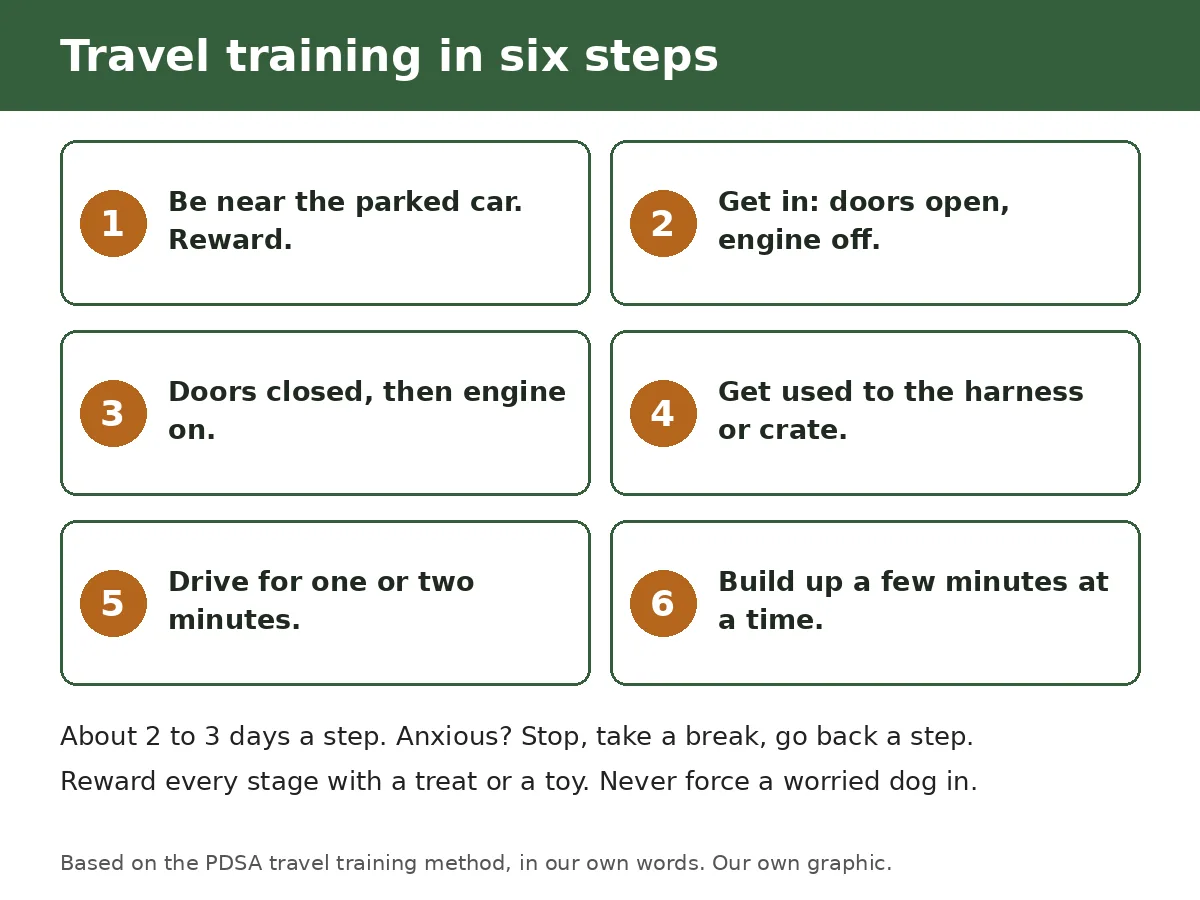
- Near the car. Take your dog to the car at times when you're not going anywhere. Reward them for being near it.
- In the car, doors open, engine off. Once they're happy to walk up to and stand by the car, encourage them in with all the doors open and the engine off.
- Doors closed, then engine on. When they're happy inside, try closing the doors or switching the engine on. Reward them.
- Get used to the restraint. Next, get them used to their harness, crate or other restraint. PDSA says if your dog already has one, you might want to try a new one, for example switching from a harness to a crate or the other way round.
- A very short drive. Once they're relaxed in the car with the engine on, drive for one or two minutes. PDSA says to stop and walk home if they start to get worked up.
- Build up slowly. Make sure your dog is happy on a few journeys before making them longer, then add a few minutes at a time.
Throughout, keep an eye out for signs they feel sick or anxious, and take regular breaks.
A few things I'd add as a trainer:
- End on something good. PDSA's safe car travel page suggests ending journeys with something fun such as a treat, a walk or a day out. If every drive ends at the vet, the car becomes the vet trip.
- Keep sessions short. A couple of minutes of calm is worth more than half an hour of stress.
- Go at your dog's pace. At 2 to 3 days a step, as PDSA suggests, six steps take a few weeks. If your dog needs longer at any step, that's fine.
- Keep it reward based. Never force a worried dog into the car. It makes the fear worse.
Setting up the car
How your dog travels matters for safety and for comfort.
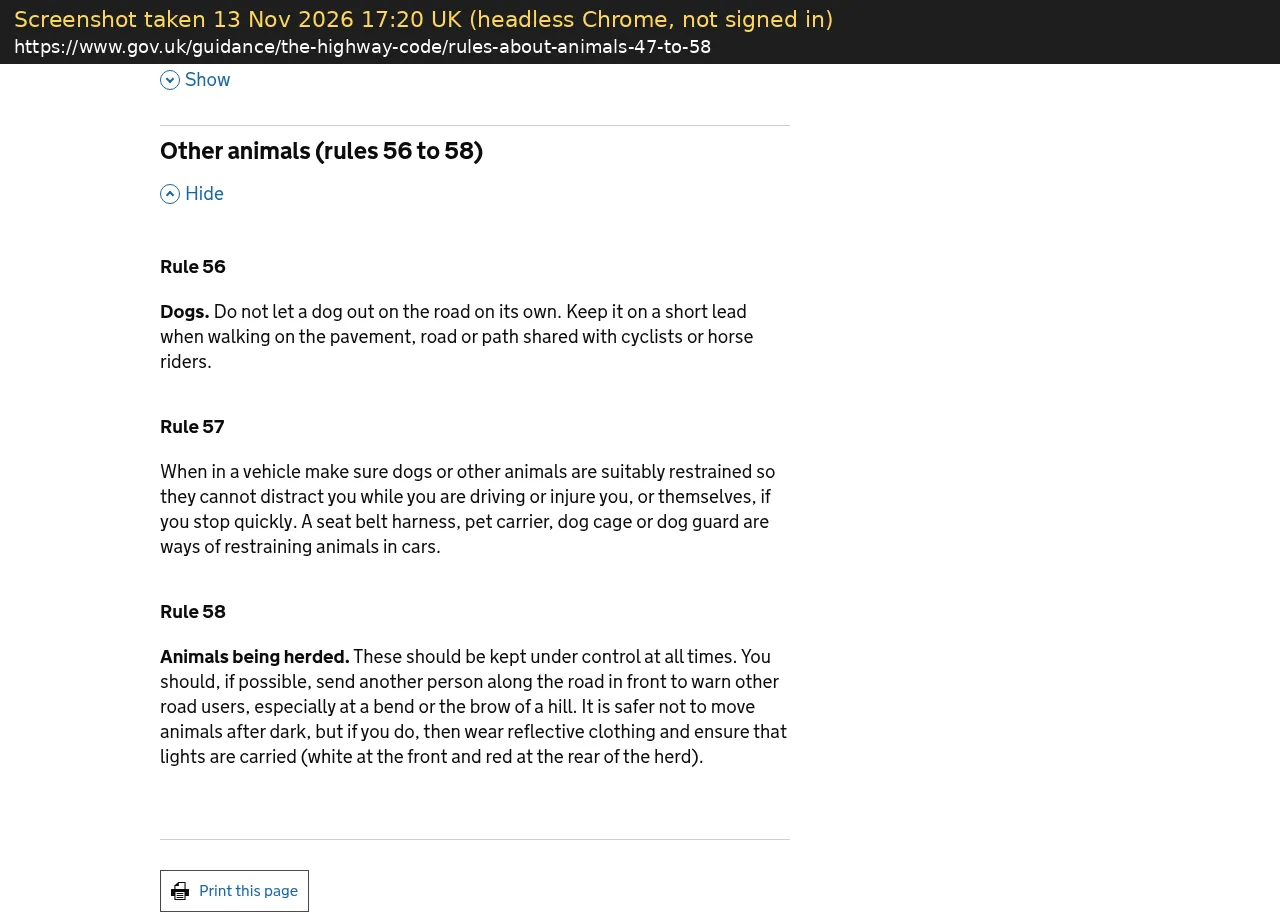
Restrain your dog. Rule 57 of the Highway Code says that when in a vehicle you should make sure dogs or other animals are suitably restrained so they can't distract you while you're driving or injure you, or themselves, if you stop quickly. It lists a seat belt harness, pet carrier, dog cage or dog guard as ways of restraining animals in cars. PDSA's safe car travel page adds that a lot of car insurance policies require you to restrain pets properly, and notes that boot or luggage guards protect your passengers in an accident but won't protect your pet.
Help them feel secure. PDSA suggests a pet-safe crate or travel harness to help your dog feel safe, and something comfortable to sit on so they don't slip around when the car moves. If your dog barks in the car rather than feeling sick, see the dog barking in the car guide.
Keep them cool. PDSA says to keep your dog cool in the car and make sure the cool air reaches them in the back or the boot. Cars warm up quickly.
Heads in. PDSA says don't let dogs stick their head out of the window. They could knock their head, fall out, be hurt by stones kicked up by the tyres or distract other drivers.
Never leave them in the car. PDSA's advice is never to leave your pet alone in the car.
Before and during the journey
- Feeding. PDSA's car sickness page suggests feeding your dog at least 2 to 3 hours before travel. Its safe car travel page says try not to feed right before a car ride, and give them plenty of time to digest or leave the meal until after the journey.
- A walk first. PDSA suggests walking your dog before a journey.
- Breaks. PDSA says take regular breaks on journeys, so your dog can stretch their legs and have a drink.
- Water. On warm days, PDSA says to offer water regularly through the journey.
- Short first. For a dog who's still learning, PDSA says start with short journeys of no more than five minutes and build up by a few minutes at a time.
How The Dog Geezer handles it on walks and adventure days
On my dog adventure days, I collect your dog from home and bring them back, across Heywood, Rochdale, Middleton and Bury. Before any outing, I chat with you about your dog's fitness and temperament.
If your dog gets car sick or worried in the car, tell me in that first chat. That way we can talk about whether a day out is right for them yet, and you can work on the travel training above at home first. If your dog's worry shows up in other places too, my reactive dog training and dog training in Heywood pages explain how I can help.
You can find out more about me on meet The Dog Geezer.
Dog car sickness: the bottom line
Dog car sickness is common, especially in puppies, and it usually gets better with patience rather than willpower. Speak to your vet early, take travel training back to basics, set the car up so your dog is safe and comfortable, and build up a few minutes at a time.
FAQs
Why does my dog get sick in the car?
PDSA says car sickness is thought to be caused by certain types of movement affecting the balance centre in the brain, combined with anxiety or stress when travelling. It's common in puppies and in dogs who aren't used to travelling or weren't slowly introduced to the car.
Do puppies grow out of car sickness?
Don't count on it. PDSA says car sickness is common in puppies, but it doesn't say they grow out of it. It says the problem is likely to get worse over time if it isn't managed. Start short, happy travel training early and speak to your vet if your puppy is sick in the car.
Should I feed my dog before a car journey?
Not right before. PDSA's car sickness page suggests feeding at least 2 to 3 hours before travel, and its safe car travel page says to give your dog plenty of time to digest or leave the meal until after the journey. If your dog is sick even on an empty stomach, talk to your vet.
Can I give my dog human travel sickness tablets?
No. PDSA says non-prescription and human medications for car sickness are often not effective and can have side effects. If your dog needs medicine, your vet can prescribe a licensed anti-sickness medicine.
How do I get my dog used to the car?
Use travel training. Start with your dog near the parked car, then in it with the doors open and engine off, then doors closed and engine on, then their restraint, then a one or two minute drive. Build up slowly and reward every step. PDSA suggests practising each step for 2 to 3 days.
The Dog Geezer
Need a hand in Heywood or Bury?
If you’d like hands-on help to stop your puppy pulling on the lead, have a look at dog walking in Heywood and dog walking in Bury, or 1-to-1 dog training in Heywood for lead manners, and get on the waiting list. Fully insured and DBS-checked.
Cheers, James